
Residential bike fitting course in Spain
November 2026 and March 2027 on the Costa Blanca. An online course, four days of teaching and three months of mentoring, for six fitters who want to look beyond standard rules and prescribed adjustments.
Join me in Spain for a residential bike fitting course combining four days of in-depth tuition, riding on the Costa Blanca and three months of one-to-one mentoring. The course runs twice: 22–27 November 2026 and 7–12 March 2027.
The course is designed for experienced bike fitters who want to look beyond standard rules and prescribed adjustments. We'll explore how variables, mechanisms and forces affect a rider, giving you a more structured way to work through difficult cases, choose appropriate interventions and understand why a change has, or hasn't, worked.
The course comes in three parts. You work through an online course on anatomy, biomechanics and professional scope before you travel. Then four days in Calpe, applying it to real riders and real equipment decisions, and three months of one-to-one mentoring once you're home in your own studio.
There are just six places on each course.
22–27 November 2026
- Arrive Sun 22
- Teaching Mon 23 to Thu 26
- Depart Fri 27
€1,900, whenever you book
7–12 March 2027
- Arrive Sun 7
- Teaching Mon 8 to Thu 11
- Depart Fri 12
€1,900 until 23 Jan, then €2,270
- Dates
- 22–27 November 2026 or 7–12 March 2027
- Location
- Calpe, Costa Blanca, Spain
- Online course
- Four modules and ten lessons, completed before you travel
- Tuition
- Twelve sessions, 24 hours over four six-hour teaching days
- Group size
- Maximum of six fitters per course
- Accommodation
- Five nights in a double room with balcony and sea views, at a cyclist-friendly hotel used by professional cycling teams. Booked directly with the hotel at the agreed course rate
- Riding
- Optional no-drop group rides
- Ongoing support
- Three months of one-to-one mentoring
- Software
- Six months' free use of AIDOS
- Nearest airport
- Alicante
- Payment
- Course fee in full, or a 50% deposit, at registration; balance 14 days before the course
- Total cost
- €1,900 for November. €1,900 for March if you book by 23 January, then €2,270
The total is my course fee plus the hotel's agreed rate for a double room with balcony and sea views. Between them they cover the online course, four days of teaching, five nights' room and breakfast, lunch on teaching days, one group evening meal, the rides, three months of mentoring and six months of AIDOS. You cover your own travel, airport transfers, any other evening meals, bike hire and insurance.
Download the course outlines and booking terms ↓
Develop a more consistent approach to bike fitting
A lot of bike fitting education is based on established associations between a symptom and a particular adjustment. If a rider reports a certain type of discomfort, the fitter makes the change commonly recommended for it.
Those rules can be useful, but they don't necessarily explain what is causing the problem in that individual rider. If the usual adjustment doesn't work, the fitter may have little basis for deciding what to try next.
During the course, we'll slow that process down and look at what is actually happening, why it may be happening and what any intervention is likely to change.
You'll learn how to:
- identify the variables that may be contributing to what you see during a fit
- understand the mechanisms behind a rider's movement, discomfort or compensation
- consider the forces acting on the rider and how these affect their position
- connect an intervention to a clear explanation of why it should work
- assess what caused an improvement, rather than simply noting that something changed
- work more methodically through difficult or less obvious cases
- incorporate this approach into your existing fitting process
This is the basis of what I call the Mechanism Method.
A framework for examining the rider in front of you, and for working towards an answer when the usual solution doesn't fit.
The course won't give you a rigid new protocol or ask you to discard everything you already do. It will give you a framework for examining the rider in front of you, making evidence-led decisions and working towards an answer when the usual solution doesn't fit the situation.
It starts before you travel
The online course is a prerequisite, and it's included in the fee. You get access as soon as your booking is confirmed, and you work through it in your own time before you arrive.
It covers the anatomy, biomechanics and professional-scope foundations that the practical days then build on: four modules and ten lessons, with applied cycling examples, interpretation exercises, knowledge checks and a final integrated case.
Doing this part at home is deliberate. It keeps our four days together off material you could read on your own, and it means everyone arrives speaking the same language.
Understanding the moving rider
- A1 Movement and functional anatomy. Describing movement accurately: joints and segments, anatomical reference systems, movement in three dimensions and the limits of motion capture.
- A2 Muscle architecture and mechanical role. A muscle doesn't make sense from the joints it crosses. Its structure, length, contraction conditions and neighbours all change what it can do in a given position.
- A3 Motor control, proprioception and coordination. A rider's movement reflects how the nervous system organises the whole task. Coordination, sensory information, variability and fatigue, and what you can't read from movement alone.
Regional function, loading and professional scope
- B1 Joint function across the cyclist. No joint works on its own: a change at the foot, pelvis or upper body shows up elsewhere. How to recognise compensation without treating it as a fault.
- B2 Tissue loading and symptom awareness. Symptoms don't come from position alone. Training exposure, tissue capacity, recovery and sensitivity, and a way to think about common presentations without reaching for a diagnosis.
- B3 Symptom history, scope and referral. Deciding whether fitting experimentation is appropriate at all: structured histories, screening, reversible testing, follow-up, and where bike fitting stops and clinical care starts.
Forces and biomechanical interpretation
- C1 Forces, vectors, torque and joint moments. Movement shows you what happened, not the forces behind it. Pedal and reaction forces, torque, joint moments, and the difference between measuring something and inferring it.
- C2 Torque–angle and force–velocity relationships. A joint angle has no fixed meaning. Position changes muscle length, leverage and velocity, so the familiar fitting angles are operating conditions rather than targets.
- C3 Pedal force, joint power and inverse dynamics. Pedalling systems produce a lot of data, and each output answers one narrow question. Force direction, mechanical effectiveness, net joint moments and joint power, read for what they actually show.
Integrating the framework
- D1 Integrated case and readiness assessment. A complete rider case. You organise the evidence, weigh the competing explanations and decide what the evidence can support. This is the bridge into the four days in Calpe.
The full lesson-by-lesson outline is in the online course outline (PDF).
Four days of learning, with time to ride
Many comparable courses pack 24 hours of teaching into three eight-hour days. We'll cover those 24 hours over four six-hour days instead.
The shorter teaching days will give you more time to absorb the material, discuss cases and ask questions. They'll also leave enough time for us to get out on our bikes and enjoy the roads and climbs around the Costa Blanca.
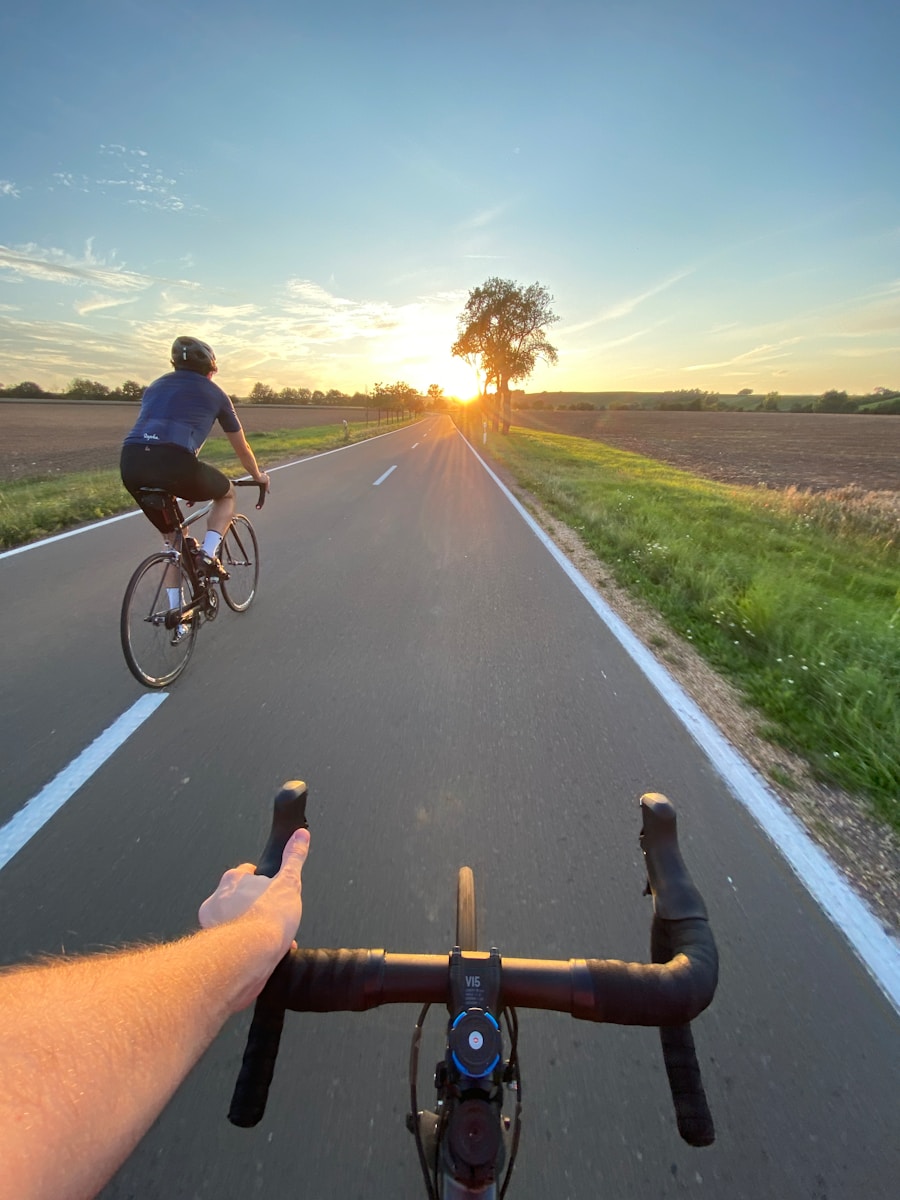
The rides are optional and scheduled around the teaching, so you come to the practical work having already ridden. That's useful in itself. Fatigue changes how a rider moves and what they tell you, and it helps to have felt that in your own legs the same week you're assessing someone else's.
The rides will be no-drop and designed to accommodate different fitness levels. You don't need to be exceptionally fit to take part. Where the route allows, stronger riders will be able to repeat climbs or add some extra distance without breaking up the group.
I worked as a cycling-holiday guide and mechanic at the start of my career, so I'm used to planning rides for groups with different levels of fitness and making sure everyone gets a worthwhile ride.
You'll need to be happy that you're fit enough to ride and that your bike is roadworthy, and I'd strongly recommend travel and medical insurance that covers cycling.
What the four days cover
Twelve sessions across the four days. Each one is a presentation followed by a long practical workshop, and you rotate through fitter, rider and observer, so you get your hands on several different bodies instead of watching one demonstration rider.
You build one case record across the four days instead of a series of disconnected exercises. The course ends with a full fit and a case presentation.
Day 1Building the reasoning process
The first day sets up the method we use for the rest of the week. You turn what you see into a hypothesis you can test, without losing sight of the rider's goals, the demands of their riding, their physical capacity, the equipment in front of you and the uncertainty in your own measurements.
-
From observation to a testable hypothesis
You take a structured rider history and set a baseline you can repeat, then separate what you actually observed from what you calculated, interpreted or assumed. The practical runs the whole reasoning chain: variable, mechanism, forces, test.
-
Functional anatomy as a constraint on position
Joint function, muscle architecture and a rider's available movement can all constrain a position. You predict how, then compare that with what the rider does once they're on the bike.
-
Saddle and pelvis interaction
Saddle choice is more than width and sit-bone numbers. Shape, profile, padding, pelvic orientation, the riding task and the rider's movement strategy all change the answer, and you justify the saddle you choose from evidence rather than from category, convention or brand.
Day 2Feet, shoes and pedals
The second day is about the rider's connection with the pedal, and how the shoe, insole, cleat and pedal change the interface that force passes through.
-
Foot evaluation and shoe selection
You assess foot dimensions, shape, volume and function, then set them against how a shoe is built, how it fits and how much cleat adjustment it leaves you. Part of the work is recognising when what you've found sits outside your scope.
-
Pedal forces, cleat position and float
Cleat changes alter how force is applied, but visible movement won't tell you what the joint is doing. You map what each pedal system lets you adjust, predict what a change should do, then test one variable at a time. Movement, pedalling data, symptoms and rider perception stay separate pieces of evidence.
-
Insoles and metatarsal support
An insole changes pressure, sensory input and the volume left in the shoe, so it needs a purpose rather than a routine. You compare approaches, configure or make one, add metatarsal support and reassess on the bike.
Day 3Whole-body support and compensation
The third day widens the view beyond single joints and contact points, to how the rider organises their body between saddle, handlebars and pedals.
-
Centre of mass, support and weight distribution
Position changes how load is spread across the bike, and a static weight measurement won't tell you the whole story. You predict the change in support and contact-point loading, measure it, and stay honest about what each measurement can show.
-
Handlebar and cockpit selection
The cockpit affects support, breathing, control and how much work the upper body does, and the right answer changes with the discipline. You work through road, mountain-bike and time-trial examples, testing changes against the rider's anatomy, position and control needs.
-
Interpreting asymmetry and advanced visual cues
Asymmetry is common, it isn't automatically a problem, and it rarely has one explanation. You practise describing what you can see before interpreting it, build competing explanations and pick the test that could tell them apart. We also cover conservative experimentation, referral, and what to say when you can't be certain.
Day 4Integration and complete fitting decisions
The last day turns all of it into a process you can repeat: planning the experiments, defending the decisions and explaining the outcome.
-
Designing efficient fitting experiments
A good fit doesn't mean changing everything you can change. You prioritise the interventions, control the confounders you can avoid, and build a short sequence of reversible tests before anything on the bike moves.
-
Supervised full fit
You complete a full fit in rotating roles, applying the week's framework to the history, the assessment, the equipment choices and the competing explanations. I'm assessing safety, reasoning, sequencing, communication and whether you can say why you did each thing.
-
Defending and communicating the fit
Explaining a fit without diagnosing, without false precision and without more certainty than you have. You present your case, take the peer review, and set out follow-up, warning signs and the reasons you would refer someone on.
The full session-by-session outline is in the in-person course outline (PDF).
Three months of one-to-one mentoring
Learning a new approach during a course is one thing. Applying it when you're back in your own studio with a real rider is another.
That's why the course includes three months of one-to-one mentoring with me.
If part of the material hasn't clicked, you're struggling to apply it to a case or you're unsure how to incorporate it into your existing protocol, you can message or call me and we'll work through it together.
The mentoring is my way of standing behind the course. I don't want you to go home with a collection of notes and no idea how to put them into practice.
Six months of AIDOS
You'll also get six months' free use of AIDOS, the fitting software I built and use in my own studio. It keeps each rider's fit data, positions and history in one place, so you can compare fits over time.
Your clients get their own dashboard, where they can see everything saved during their fit. There's no report to write up and send afterwards, which takes a lot of admin out of every fit.
We'll set up your account together during the course, with every module switched on and no card details needed. Shortly before the six months end, AIDOS will email you a reminder to add a card if you'd like to keep using it.
A full residential experience
We'll be based at a cyclist-friendly hotel near Calpe that is regularly used by professional cycling teams visiting the area for training camps.
Each room is a double with a balcony and sea views. The hotel is approximately 100 metres from the beach and also has a swimming pool and gym.
You book your own room and breakfast with the hotel, at the rate they've agreed for course participants, using the code I send you when you register. The reservation is between you and the hotel.
We'll study, ride, eat and stay in the same place. That means there will be plenty of time to discuss ideas, share experiences and continue conversations outside the formal teaching sessions.
The aim is to create an immersive residential experience, rather than a course where everyone disappears as soon as the day's teaching ends.
Bringing or hiring a bike
You're welcome to bring your own bike, but you don't have to. Bike hire can be arranged through our friends at Biking Luca.
The hotel has shared bike storage, although you can also keep your bike in your room. There is a small workshop area with tools where you can rebuild your bike after travelling and pack it again before heading home.
If you have a mechanical problem during one of the rides, we'll cover collection and transport back to the hotel. Biking Luca will then help get you riding again as quickly as possible.
What's included and what you pay
The November 2026 course is €1,900. The March 2027 course is €1,900 if you book by 23 January 2027, and €2,270 after that. Either total covers:
- the prerequisite online course: four modules and ten lessons
- four days and 24 hours of tuition, in twelve sessions with practical workshops
- five nights' room and breakfast, in a double room with balcony and sea views
- lunch on each teaching day and one group evening meal
- the guided group rides
- three months of one-to-one mentoring
- six months' free use of AIDOS
Travel to Spain, airport transfers, additional evening meals, bike hire and personal insurance are not included.
Early booking on the March course
Book the March 2027 course by 23 January 2027 and you pay €1,900 rather than €2,270. The November 2026 course is €1,900 whenever you book.
How the two payments work
You pay for the course in two parts.
- Room and breakfast is booked and paid directly with the course hotel, at the rate it has agreed for course participants: a double room with a balcony and sea views. The hotel takes payment under its own terms, currently on arrival.
- The course fee is paid to me. It covers the online course, the teaching and practical workshops, the guided rides, lunch on each teaching day, one group evening meal and the three months of mentoring.
I don't sell accommodation, take payment for it or act as the hotel's agent. Your room is your own contract with them, on their terms. The total I advertise is my course fee plus the hotel's agreed rate for room and breakfast on the course dates, and it's the most you'll pay for those two things.
How booking works
-
Book your room.
Reserve room and breakfast directly with the course hotel, using the promotional code I send you when you register.
-
Pay the course fee.
In full, or as a 50% deposit, at registration. Places go first come, first served, and yours is confirmed once the payment or deposit reaches me.
-
Pay the balance.
If you paid a deposit, the balance is due no later than 14 days before the course starts.
Online course access
Your access opens as soon as your booking is confirmed. Because the online course is delivered digitally and straight away, starting it ends the statutory right to withdraw from that part of the purchase, and €350 is then retained from any refund. If that happens you keep your access for the normal period. Nothing here limits your statutory consumer rights, including those covering faulty digital content.
If you need to cancel
Cancel by letting me know in writing. These refunds apply to the course fee:
| Notice given | Course fee |
|---|---|
| More than 14 days before the course | Full refund of payments made, less €350 if you've started the online course |
| 14 days or fewer before the course | Non-refundable, except where the law requires otherwise |
Where I can, I'd rather move you to a future course than keep your money, so ask. Moving your place to another course depends on there being room on it.
Your room is a separate contract with the hotel, under its own cancellation policy. Cancelling the course does not cancel your hotel reservation, so do read their terms before you confirm the room.
Visas, insurance, the cycling activities and what happens if I ever have to cancel a course are all covered in the booking terms (PDF).
Staying longer or bringing a partner
The course is five nights, but you don't have to leave when it ends. If you'd like to turn the trip into a longer riding holiday, you can book extra nights before or after the course directly with the hotel.
You're also welcome to bring a partner, friend or family member to share your room. The rooms are doubles with a balcony and sea views, and with the beach 100 metres away, a pool and a gym, there's plenty to do while you're in sessions. Their stay is arranged directly with the hotel, and I'll put you in touch when you book.
Getting there
Alicante–Elche is the nearest airport, roughly an hour's drive from Calpe. You'll need to make your own way to the hotel, and I'll send you its name, address, check-in details and the booking code when you register.
If you need a visa, I can provide a letter confirming the course details and your registration. Ask early, and don't book non-refundable travel until your documents are confirmed.
The course runs from 22–27 November 2026 and 7–12 March 2027. Each course is limited to six fitters.
Course documents
These are the full outlines and the booking terms as they stand in October 2026. Read them before you register, and ask me about anything that isn't clear.
Register your interest
Leave your details and I'll email you the full course information, the hotel's details and the booking code. Registering doesn't commit you to anything: your place is held once your course fee or 50% deposit reaches me.
I'll only use your details to contact you about these courses, and future ones if you've ticked the box. See the privacy policy. Prefer email? Write to andy@andy-brooke.com.